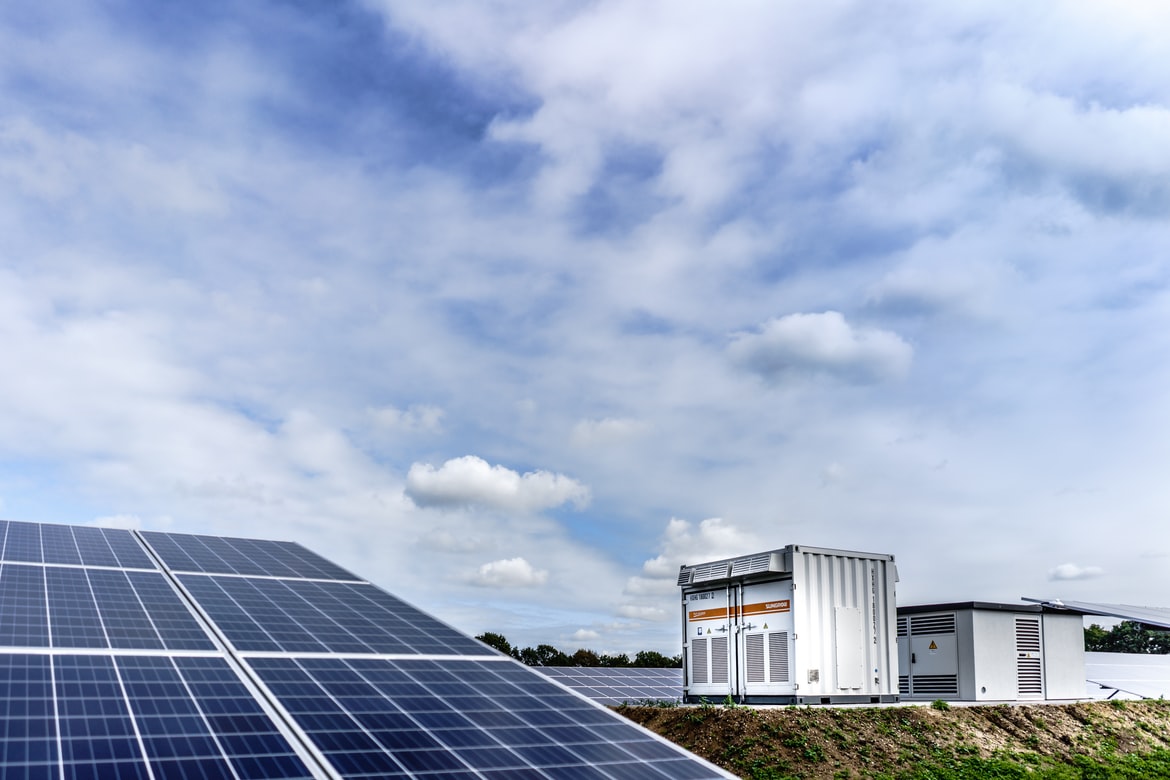
The information provided here is taken from the post Energy Storage.
If we are to achieve the ‘Net Zero by 2050’ goal then wind and solar are going to make up a large fraction of the total energy supply mix. As discussed in the post Solar and Wind, attractive though these energy sources may be, they have important limitations. In particular, they have a low energy density, and they are intermittent. Given that the sun is not always shining, nor the wind always blowing, these two sources supply energy only about 35% of the time. Moreover, they may not supply that energy at the time that it is most needed, i.e., they are not dispatchable.
Therefore, it will be necessary to have large scale energy storage capability to store energy as it is generated (but not immediately needed), and that can deliver that energy to the end user as needed. Otherwise it would be necessary to construct conventional power plants to operate when the sun is not shining or the wind is not blowing. Doing so would negate the purpose of having the renewable source in the first place.
It is probably fair to say that most discussions to do with Net Zero programs fail to recognize the magnitude of the energy storage problem — it is formidable. We will discuss this important topic in depth in future posts. At this point the following observations can be made.
- Batteries provide a very quick response to changes in energy demand (which is one reason they are used in vehicles). However they are expensive, and raw material supplies are an issue (see Lithium and Its Limits). Batteries have an important role in the energy storage mix, but they provide only a partial response.
- Hydrogen is likely to play a crucial role. It can be manufactured relatively easily from electricity and then either burned to generate power when needed, or used in fuel cells. Hydrogen is also an important feedstock for the chemical industries.
- Chemicals such as ammonia can be manufactured and then used to generate energy in downstream processes and in transportation.
- Physical Devices can use surplus energy to raise weights, and then to lower them when the energy is needed.
- Phase Change uses surplus energy to condense a gas such as air. When the energy is needed, the liquid is vaporized and used to drive a turbine.
- Pumped Hydro using a two reservoir system can be used. Surplus energy is used to pump water from the lower to the higher reservoir. The water is released and flows through a turbine when electricity is needed. Lack of suitable sites limits the feasibility of this option.