NO PROPER HEADER

  1. Home
  2. Health, Safety and Environmental (HSE)
Health, Safety and Envrionmental (HSE)
Laima_Gūtmane


Most companies in the process industries have Health, Safety and Environmental (HSE) departments; which are also referred to by the letters SHE, HES and EHS. (The sequence of the letters is not critical, but a good choice is EHS because the focus narrows down from the entire environment to long-term health issues and then to short-term safety challenges. In the United Kingdom, the letters ‘HSE’ generally refer to the regulatory agency, the Health and Safety Executive.)

The term Loss Prevention is also used to describe HSE activities; it also the title of the well-known three volume series Loss Prevention in the Process Industries (Lees 2004).

Although Health, Safety and Environmental activities are often grouped together, and are often directed by a single manager, the three topics are actually quite distinct from one another. The Table shows who or what is covered by each of the elements of HSE; it also outlines the geographical scope and time line for each of those elements.

Features of HSE Programs
 
ElementCoversTime Line
Environmental / SustainabilityAll life formsYears, possibly decades
HealthPublic and workersMonths to years
SafetyWorkersShort-term or instantaneous

These differences matter — particularly with regards to the differences between environmental and health/safety. No company, no matter how large it may be, will receive many direct benefits from improved environmental performance — these are community, even world-wide, issues. Improvements to safety and health, however, will lead to immediate benefits to the company. Hence, environmental work will continue to be driven by external, prescriptive rules and regulations, whereas safety and health can move toward a non-prescriptive, performance-based style of management with less need for outside rules and regulations.

Environmental/Sustainability

Environmental programs are broad in scope; in principle, they cover all living creatures and all parts of the globe. A facility’s environmental performance affects not only the communities in which they are located, but also the public in general, and — when issues such as global climate change are considered — the future of the planet itself. Increasingly, environmental professionals are using the term ‘sustainability’ rather than ‘environmentalism’. The earth is viewed as having finite resources. Therefore, society’s long-term goal should be, it is argued, to have as little long-term impact on the environment as possible, and, where possible, to replace resources that have been used.

Environmental issues can take a long time to develop or to understand. For example, the issue of global warming was identified as a potential problem in the late 1970s, but only now is it becoming widely recognized and addressed. Indeed, the phenomenon has developed so gradually, and the global climate is affected by so many other poorly understood variables that many responsible professionals believe that the phenomenon of global warming either does not exist, or that its causes have not yet been fully identified. It will be many years before these disagreements are resolved.

Environmental performance is largely driven by detailed, prescriptive rules and regulations, partly because no company is big enough to address such issues alone. This prescriptive approach is in contrast to the process safety management philosophy of developing a management system that is non-prescriptive and performance-based.

In one respect, the legal framework in which environmental professionals work is unusual. In most types of legal work a person is assumed to be innocent unless proven guilty beyond all reasonable doubt. It is up to the prosecution to establish guilt — not to the defendant to establish innocence. In the case of environmental work, the opposite applies. Industries are generally assumed to be creating an unacceptable level of pollution — the onus is on them to demonstrate that they are not.

The term “Sustainable Development” is being increasingly used to suggest that we can have our cake and eat it. It implies that we can continue to grow our economies without paying an environmental price. This point of view is contradicted by the Second Law of Thermodynamics.

Health

Health issues generally affect only the workers at a facility and people living in the immediate neighborhood of that facility. The time line for health concerns is likely to be considerably shorter than for environmental issues — typically weeks or months rather than years (although some poorly understood health issues may take longer than that to diagnose and understand).

Whereas environmental compliance is typically driven by legislation, many health programs — asbestos abatement in particular — are propelled by litigation, particularly in the United States. In other words, standards and developed through the use of law suits rather than government mandates.

Safety

Safety is primarily concerned with sudden, catastrophic incidents that could result in serious injury or death. Safety generally affects only facility workers. (There are exceptions to this statement; sometimes an industrial accident can impact public safety. For example, the Bhopal event led to the death of thousands of people in the local community). In general, the time line in which safety events take place is short, often covering just a fraction of a second. Quality, Security and Process Safety Management Some companies place their quality, security and process safety functions underneath the HSE umbrella. It is suggested that doing so is probably not a wise move, for the following reasons.

Quality Management

Companies in the process industries have typically implemented a wide range of quality management programs in recent years. Although there is overlap between quality management and HSE, their goals are different, and the techniques that they use also differ from one another.

Security

One of the basic philosophies behind HSE programs is that everyone wants to do a good job — that accidents are indeed accidents. Security work, on the other hand, is premised on the possibility of malicious acts — either internal or external. Handling such threats requires a different way of thinking from that of most HSE experts.

(Safety Moment #39: Response to a Threatening Call addresses one aspect of security management.)

Process Safety Management

As discussed at the topic page Process Safety Management, the manner in which process safety and occupational safety programs are managed are quite different from one another. There are many instances of companies having an excellent occupational safety record but then suffering from a catastrophic event. (However, an effective process safety program will most likely improve occupational safety.)

Therefore, it is suggested that the management of process safety be not incorporated into the HSE function.


Articles and Safety Moments to do with HSE are listed below.

Copyright © Ian Sutton. 2018. All Rights Reserved.

Safety Moment #82: Confined Space Entry

A Confined Space is a space which is large enough for a worker to enter but has limited openings for entry and exit and is not intended for continuous employee occupancy. Entry is considered to have occurred as soon as any part of the entrant's body breaks the plane of an opening into the space. Therefore it is not permissible, for example, to take a quick breath and to put one's head into a vessel for a quick look without having an entry permit. Wherever possible work should be organized such that it can be carried out without anyone needing to enter the confined space.
Read more about Safety Moment #82: Confined Space Entry

Safety Moment #87: Hydrogen Sulfide

Hydrogen Sulfide

Read more about Safety Moment #87: Hydrogen Sulfide

Safety Moment #104: Behavior-Based Safety

Behavior based safety shutterstock_235966792

A behavior-based safety (BBS) program aims to make permanent changes in the manner in which people work.

Read more about Safety Moment #104: Behavior-Based Safety

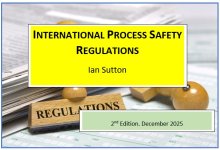
International Process Safety Regulations

Submitted by gwddev on Wed, 12/03/2025 - 4:3 am
International Process Safety Regulations

This primer provides a concise and structured overview of how major accident hazards are regulated around the world. It explains the foundations of process safety regulation, compares national and regional systems, and highlights global trends that are reshaping expectations in the process and energy industries.

Read more about International Process Safety Regulations

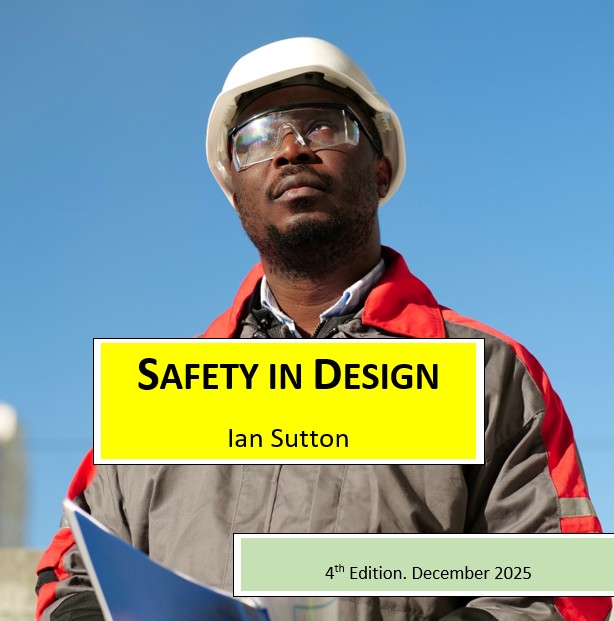
Safety in Design (4th Edition)

Submitted by gwddev on Thu, 11/20/2025 - 10:20 pm
Primer: Safety in Design

This Primer, Safety in Design, is priced at $25 (U.S.) It can be purchased here. The Kindle link is here.

Read more about Safety in Design (4th Edition)

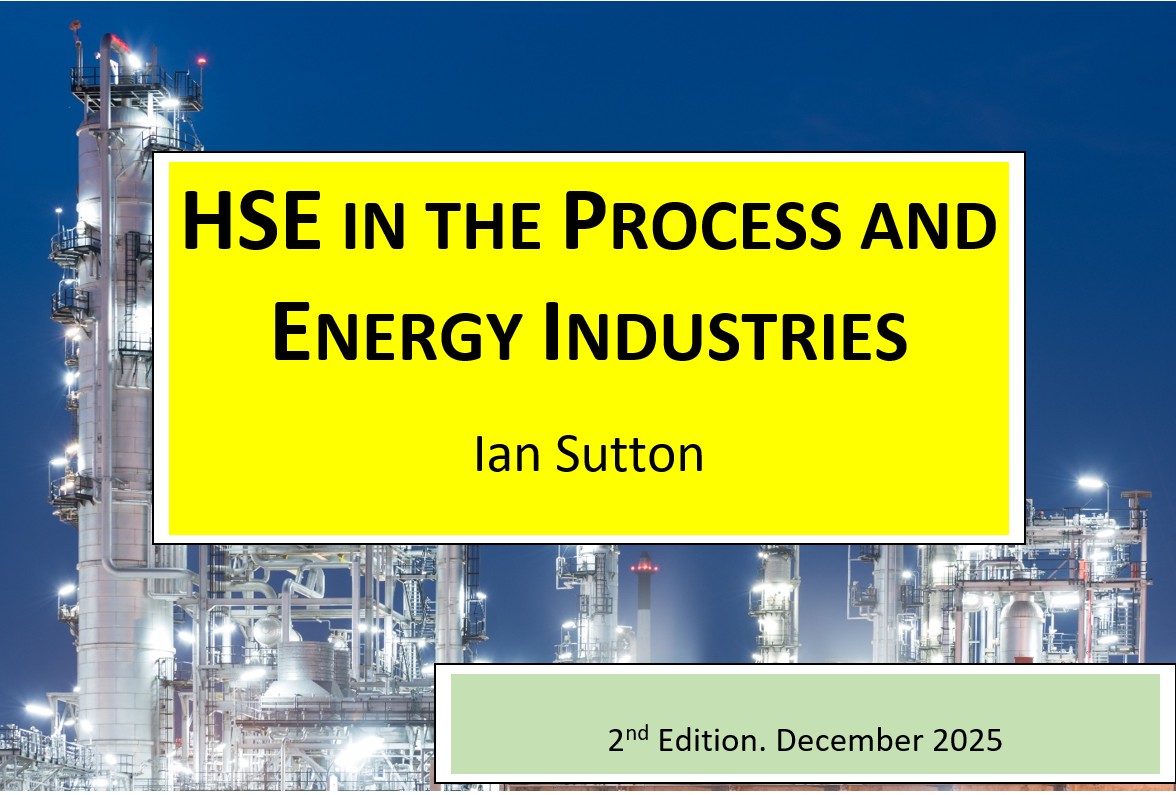
HSE in the Process and Energy Industries (2nd Edition)

Submitted by gwddev on Thu, 11/20/2025 - 7:20 pm


Primer: HSE Health Safety Environmental

The Primer Distillation is priced at $25 (U.S.) It can be purchased here. The Kindle link is here.

Read more about HSE in the Process and Energy Industries (2nd Edition)

History of Safety Management in the Process Industries

Submitted by gwddev on Sat, 01/28/2023 - 9:28 pm

Video

History Safety Management: we have published a 30 minute video package that shows how safety management systems in the process and energy industries have developed during the course of the last 300 years. The YouTube video shown at the end of this page provides a short extract.

Read more about History of Safety Management in the Process Industries

The New PSM Normal (5) — Standards

Submitted by gwddev on Mon, 01/23/2023 - 6:23 pm

2020-05-20

In this post I would like to consider how those of us who work in industrial and process safety can help the community at large? The subject came to mind when I was discussing the eventual return of people to church services with a colleague. Our Episcopal diocese has organized a four-phase program for the re-opening of the churches (we are currently in Phase One).

Read more about The New PSM Normal (5) — Standards

The Case for Safety Cases

Submitted by gwddev on Mon, 01/23/2023 - 4:23 pm

The Deepwater Horizon/Macondo catastrophe in the Gulf of Mexico (GoM) in the year 2010 demonstrated the need for new safety management regulations. The draft regulations went through various iterations, and the name of the responsible government agency changed twice. In the end, the SEMS (Safety and Environmental Management System) regulation became a requirement for offshore oil and gas operations in the United States.

Read more about The Case for Safety Cases
Subscribe to Health, Safety and Environmental (HSE)

Get a Cool Website logo

ACME Company is located in Springfield and in easy access from Henrico, Chesterfield, and Hanover counties. Call us today at 555-867-5309.

Site Nav

  • Home
  • About

Contact

Please feel free to reach out to us via email, phone, Facebook or Google My Business.

Contact Us

© 2026 Ian Sutton Technical Books |  All Rights Reserved

Designed & built by Garza Web Design in Richmond VA.

  • Home
  • Publications
    • Books
    • Ebooks
    • Primers
    • Substack (Free)
    • Substack (Paid)
  • Industries
    • Industry One
    • Industry Two
    • Industry Three
    • Industry Four
  • Analysis
  • Videos
  • About
  • Contact